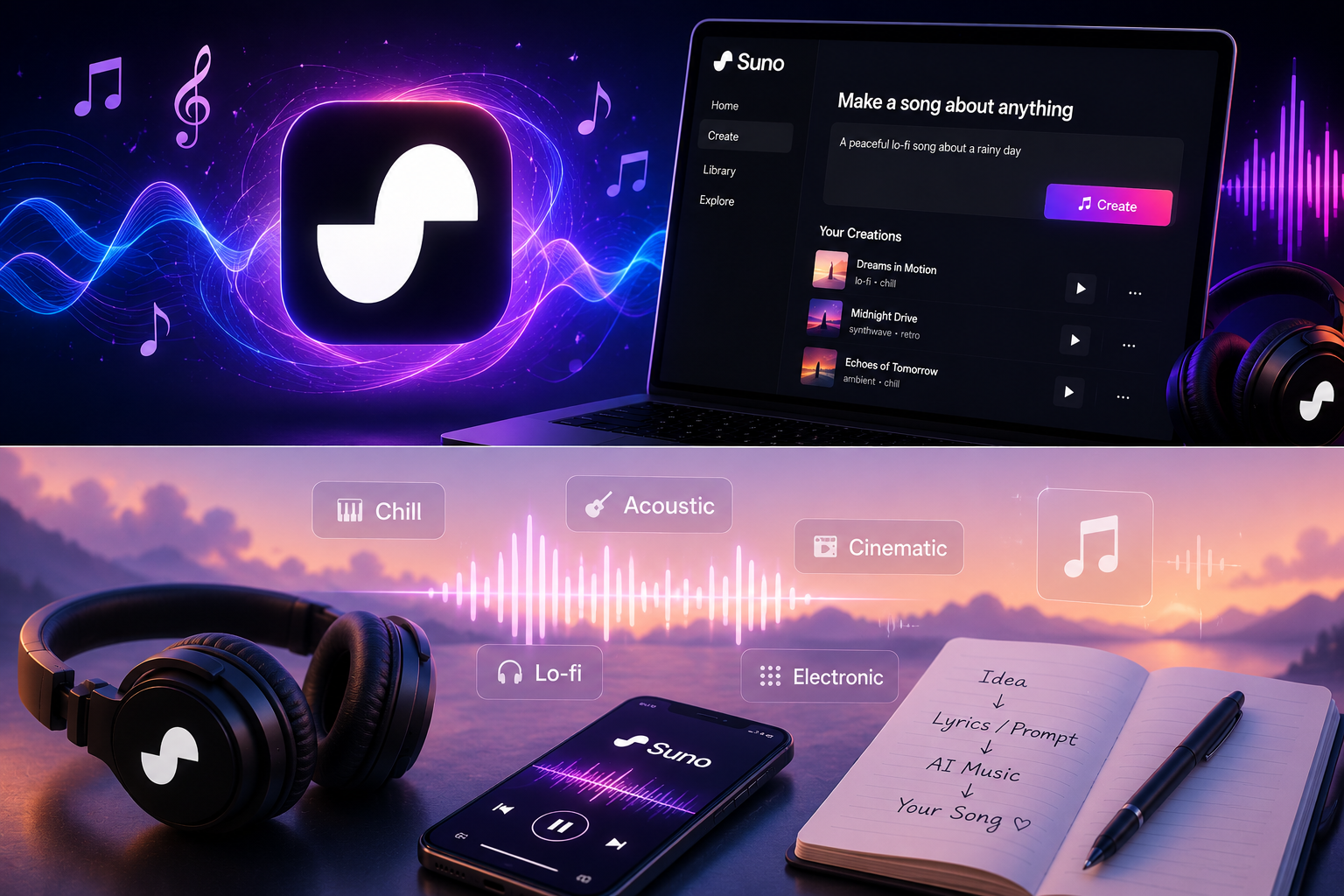
For most of my life, creating music felt like something that belonged to other people.
Musicians spent years learning instruments. Producers invested time mastering software. Songwriters developed skills through years of practice.
As someone with no formal music background, music creation always seemed far outside my reach.
Then I tried Suno AI.
What surprised me wasn’t that it could generate songs.
What surprised me was how approachable the entire experience felt.
For the first time, creating music didn’t seem reserved for experts.
It felt accessible.
Why Music Creation Always Felt Difficult
Before AI music tools existed, creating original music typically required several things:
- Musical knowledge
- Recording equipment
- Production software
- Editing skills
- A significant time investment
Even getting started could feel overwhelming.
If someone wanted to create a simple song, there was often a steep learning curve before any results appeared.
For beginners, that barrier alone was enough to stop many people from trying.
My First Experience With Suno AI
Using Suno AI felt very different.
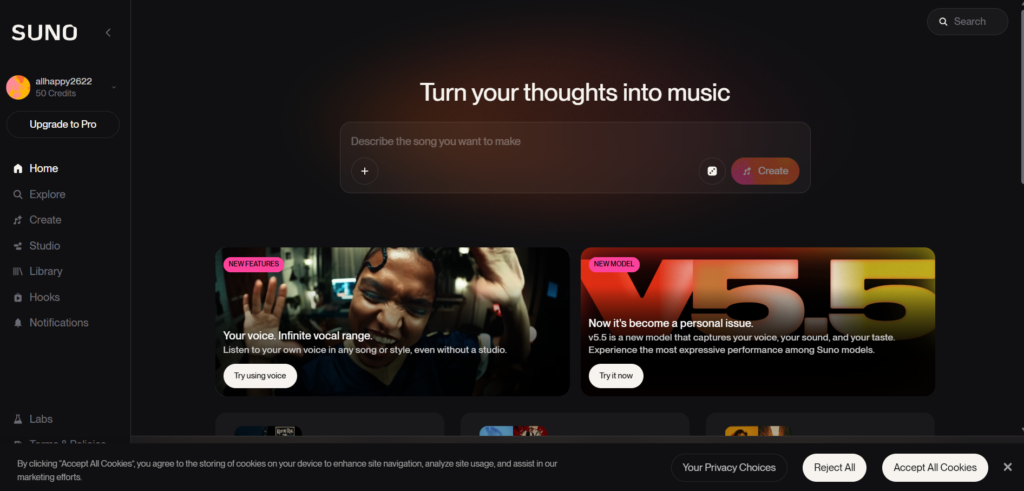
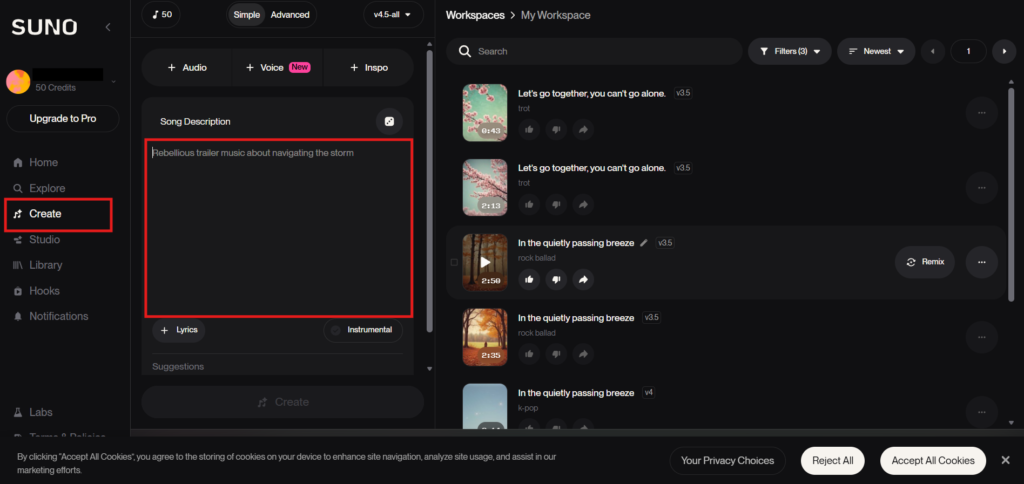
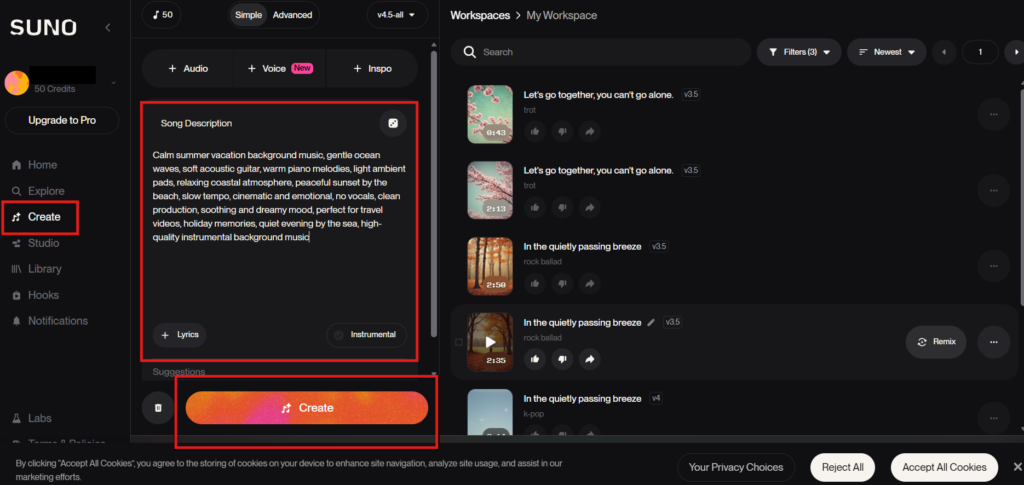
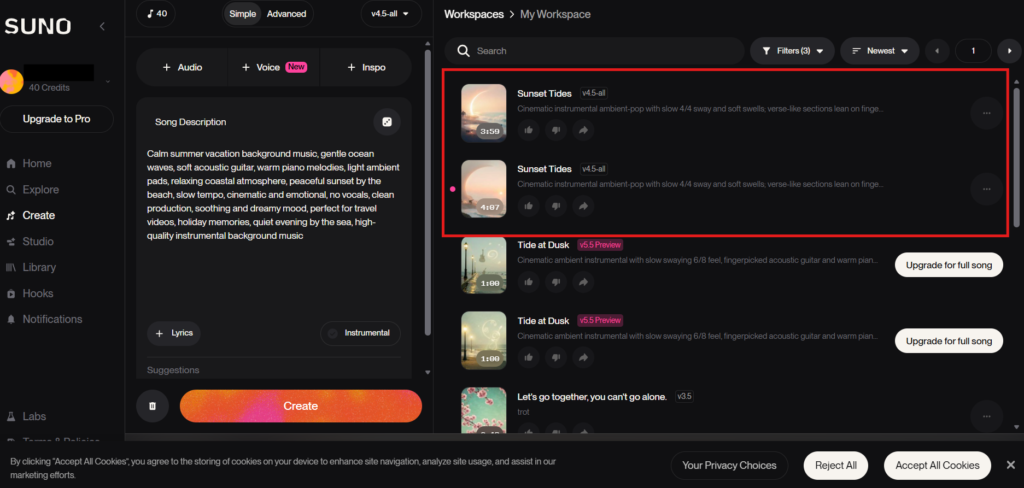
Instead of opening complicated software, I simply described the type of music I wanted.
For example:
- cinematic soundtrack
- emotional piano ballad
- electronic dance track
- acoustic folk song
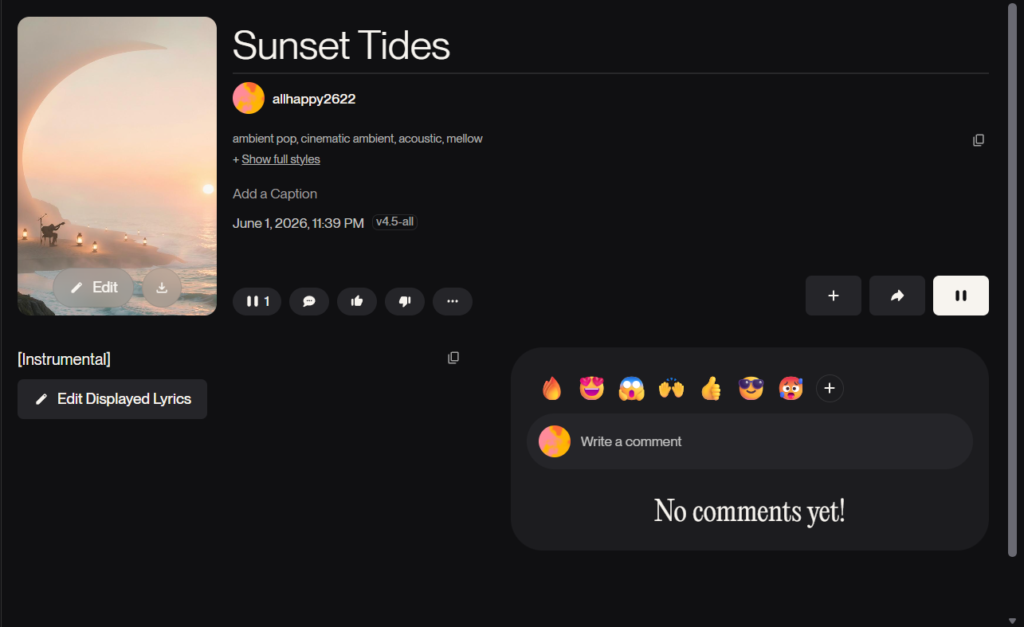
Within minutes, Suno generated complete songs based on simple prompts.
The experience felt surprisingly similar to using ChatGPT.
Instead of generating text, however, Suno generates music.
That simple idea changes everything.
What Beginners Might Love About Suno AI
One reason Suno has become so popular is that it removes many of the traditional barriers to music creation.
For beginners, several things stand out immediately.
No Music Theory Required
You don’t need to understand chord progressions, scales, or composition techniques.
A simple description is often enough to get started.
Fast Results
Traditional music production can take hours or even days.
Suno can generate multiple song versions within minutes.
Creative Experimentation
Users can quickly test different genres, moods, and styles without committing significant time or resources.
This makes experimentation much more enjoyable.
Why Some Musicians Criticize Suno AI
At the same time, I understand why many professional musicians remain skeptical.
After reading discussions from producers, composers, and experienced musicians, several criticisms appear repeatedly.
Some professionals argue that:
- Creative control is limited
- Song structures can become repetitive
- Results may lack consistency
- Fine-tuned editing remains difficult
These concerns seem reasonable.
Professional music production often requires precision that AI-generated music cannot always provide.
For someone creating commercial music or pursuing advanced production work, traditional tools still offer far more control.
Accessibility May Be the Most Important Feature
What impressed me most wasn’t necessarily the quality of the music.
It was the accessibility.
For years, music creation felt like a skill that required extensive training.
Suno changes that perception.
It allows people with ideas to experiment without needing years of technical experience first.
That doesn’t mean everyone becomes a musician overnight.
But it does mean more people can participate in the creative process.
And that feels significant.
Who Is Suno AI Best For?
Based on my experience, Suno seems particularly useful for:
- Beginners interested in music
- Content creators
- Hobbyists
- Educators
- People exploring creative ideas
On the other hand, professional musicians may view the platform differently because their expectations are often much higher.
Both perspectives can be valid.
The Bigger Picture
The most interesting thing about Suno AI may not be the songs it creates.
It may be the fact that it lowers the barrier to entry.
Throughout history, many creative tools required specialized knowledge before meaningful results became possible.
AI tools are changing that.
Just as ChatGPT made writing assistance more accessible, Suno is making music creation more accessible.
That shift may ultimately be more important than any individual song.
Final Thoughts
Suno AI is not perfect.
It does not replace professional musicians, producers, or years of musical training.
But I don’t think that’s the point.
For someone with little or no music background, Suno AI makes music creation feel possible in a way that it never did before.
And for many people, that may be exactly what makes the platform valuable.
Frequently Asked Questions
Do I need music experience to use Suno AI?
No. One of Suno’s biggest strengths is that beginners can start creating music without prior musical training.
Can Suno AI replace professional music production?
For professional projects, traditional music production tools still offer much greater control and flexibility.
What surprised me most about Suno AI?
How easy it was to go from an idea to a complete song.
Is Suno AI useful for content creators?
Yes. Many creators use it to generate background music, experiments, and creative concepts.
Why do some musicians criticize Suno AI?
Common concerns include limited control, repetitive structures, and the inability to fully customize every aspect of a song.